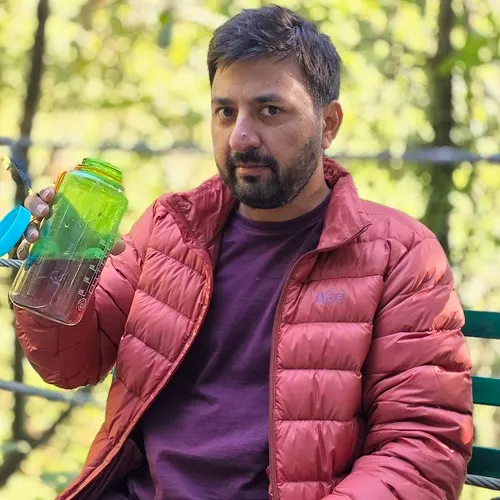
They’re scratched, stickered, and often dented from years of use, but somehow still going strong. I’m talking about Nalgene bottles. You’ll spot them on nearly every trail. I have seen hikers using them at camp, clipped to packs, and wedged into side pockets.
When I first got into hiking, I didn’t give my water bottle much thought. I just took a disposable water bottle, which I reused during hikes. After that, I bought and used flexible water bottles to save space. Later, I wanted a solid bottle and bought my first Nalgene. And yeah, I finally got the hype. It’s one of the best hiking water bottles I’ve ever used.
So why do so many hikers love these chunky plastic bottles? After hundreds of miles, a few big climbs, hot desert hikes, cold camps, and more drops than I would like to admit, here is what I have found.
Nalgene bottles are popular among hikers because they’re durable, simple, easy to clean, easy to measure water with, useful in camp, and reliable in rough trail conditions. The classic 32 oz / 1L Wide Mouth bottle is not the lightest or most compact option, but it has become a trail favorite because it just works. The current 32 oz Wide Mouth bottle is listed by Nalgene at 6.25 oz / 177.25 g, with a 63 mm cap diameter and Tritan Renew construction.
Why So Many Hikers Still Choose Nalgene Bottles
Built Like a Tank
If there is one thing Nalgene bottles are known for, it is durability. You can drop one on rocks, step on it, or freeze it overnight, and it keeps going. Mine has fallen on rocks and bounced all the way down a slope more than once, and it came back with a few fresh scratches and nothing more. No cracks, no leaks.

Plenty of hikers say their Nalgene has lasted over a decade. Mine has been with me for four years, and aside from scuffs and some sun-fading, it works like the day I bought it. For the full hands-on breakdown, I wrote a separate Nalgene Wide Mouth water bottle review based on longer trail use. Durability is a big part of why Nalgene has stayed relevant for decades, even as lighter bottles, soft flasks, hydration bladders, and insulated stainless bottles have come along.
The Shape Is Simple, but That’s the Point
The classic 32 oz / 1L size hits a practical middle ground. You can carry enough water to the next refill point, but it is not so huge that it becomes awkward in most daypacks or pack side pockets. I have struggled with tight side pockets, but overall it fits fine. In my REI Co-op Flash 22 review, a 32 oz Nalgene sat securely in the side pocket.

The wide body is easy to grab with gloves, and the straight sides slide into a pack pocket, a bear canister, or a camp setup. The cap is tethered, which I love, because I once lost a different bottle’s cap in the jungle and never found it. With a Nalgene, that is one less trail problem to think about.
Designed for the Outdoors, Even Though It Started in Labs
Nalgene bottles were not originally made for hikers. As Nalgene tells it, its durable, leakproof lab bottles started moving onto trails in the 1960s, when scientists who were also hikers began carrying them outdoors. They are still made in Rochester, New York, which is part of why the brand has such a loyal following. That lab-to-trail background shows in the design:
- Wide mouth: Easy to clean in the field, quick to fill from sinks, streams, and even shallow water sources. I even load it with ice cubes and hydration powders without any issues.
- Straight sides: Slide easily into pack pockets.
- Tethered cap: Simple, reliable, and hard to lose.
Nalgene earned its place because the design worked before it ever became trendy.
Great for DIY Trail Systems
One underrated perk of a Nalgene is how well it fits into a backcountry routine.

Hot water bottle trick: On freezing nights, I’ll fill mine with hot water and keep it in my sleeping bag. It can add real comfort when the temperature drops. As per Nalgene Australia, Sustain bottles made from Tritan can handle boiling water. But you still need to be careful: leave room for steam before sealing, avoid burns, and wrap the bottle in clothing if you use it against your body.
Filtering water: A Sawyer Squeeze does not screw directly onto a classic wide-mouth Nalgene because the Squeeze fits standard 28 mm bottle threads. I normally filter into the Nalgene from a squeeze pouch, CNOC-style bag, gravity setup, or use an adapter if needed.
If you are deciding between a bottle and reservoir setup, my hydration bladder vs water bottle guide explains where each system makes more sense.
Measuring water: This is actually handy in the backcountry. I measure water for meals and electrolyte mixes using this bottle.
Camp use: At camp, I found it far better to use because it stands upright, is easier to pour from, and is easier to use around cooking gear than a soft bottle.
You Can Actually Track Your Hydration
The Nalgene is clear, and the printed volume markers make it easy to see how much you have had and how much is left, something you do not get with soft bottles or hydration bladders.

This has helped me refill before hitting the red line more than once. It is hard to guess how much water is left in a bladder, and you can run out without realizing it. I do not treat the markings as a strict formula, since every hiker, climate, and route differs, but on a hot day, glancing down and seeing I have only had half a liter in two hours is a useful reality check.
Easy to Clean, Easy to Mix, Easy to Live With
I use hydration bladders on backpacking trips because they are convenient, but cleaning them is a chore: bite valves, hoses, corners, and drying time all add friction. A Nalgene is the opposite. The wide opening makes it easy to scrub with a brush or rinse after electrolyte mixes, which matters in hot weather. I mix my electrolytes right in the Nalgene because it is so easy to clean.

For a deeper clean I use warm water with a few drops of bleach, or the top rack of the dishwasher. Overall it is much easier to clean than most narrow-mouth bottles and hydration reservoirs I have used.
Affordable and Widely Available
A classic Nalgene is not only durable but also affordable. I don’t see this combination in any other water bottle. The classic 32 oz Wide Mouth is priced at $16.99. This is much cheaper than insulated bottles.
You’ll find them at REI, Amazon, outdoor stores, and even plenty of general retailers. That availability actually matters. If you crack a bottle after years of abuse or want a second one for camp, replacement is easy.
I’ve also seen hikers personalizing their Nalgene bottles with stickers. I’m not a big fan of it, but if you like stickers—maybe from past trips—you can definitely put them on this bottle. Between the color options, designs, and wide availability, Nalgenes are a useful, durable, and practical option for the backcountry.
Dead-Simple and Reliable
There’s no bite valve or hose like you see in hydration bladders. This is a simple, classic design. It’s a screw-top bottle. That’s it.
And sometimes, that’s all you need. No moving parts means fewer chances for failure. When you’re days from town and relying on your gear, that kind of simplicity matters more than clever features.
Nalgene vs Soft Bottles, Smartwater Bottles, and Hydration Bladders
A Nalgene is not always the best bottle for every hike. I still use flexible bottles and hydration bladders depending on the trip. The Nalgene stays in my rotation because it solves a different problem.

| Option | Best For | Main Advantage | Main Drawback |
|---|---|---|---|
| Nalgene Wide Mouth | Day hikes, camp use, cold weather, measuring water | Durable, easy to clean, easy to fill, reliable | Heavier and does not collapse |
| Soft bottle / collapsible bottle | Extra water carry, backpacking, travel | Packs down small when empty | Harder to clean and less stable at camp |
| Smartwater-style bottle | Ultralight backpacking | Very light and compatible with many 28 mm filters | Less durable and not ideal for hot water |
| Hydration bladder | Drinking while walking | Easy sipping without stopping | Harder to clean and harder to track exact remaining water |
| Insulated bottle | Cold drinks, everyday use, hot climates around town | Keeps water cold longer | Heavier and bulkier for hiking |
For me, the best setup on longer hikes is often a combination: one Nalgene for reliable access, measuring, camp, and backup, plus a soft bottle or bladder for extra capacity. If saving pack space matters more than durability, my best collapsible water bottles guide covers the soft bottles I actually use.
The Drawbacks
No gear is perfect, and Nalgenes have their quirks.
- They do not collapse. A Nalgene takes the same space full or empty. That is fine on a day hike but bulky on a tightly packed backpacking trip, where I miss my flexible bottle.
- They are heavier than ultralight bottles. At around 6.25 oz / 177 g empty, a 32 oz Nalgene is much heavier than ultralight or collapsible options, and I notice it on every trip.
- They are not insulated. Water warms quickly in the sun, so it is not the choice if you want cold water to stay cold in the heat.
- The wide mouth can spill while walking. It is great for cleaning and filling, but drinking from it on the move takes a little care. Some hikers use a splash guard or pick the narrow-mouth version.
For better cold-water performance, I compare insulated and non-insulated options in my best water bottles for hiking guide. I work around these limits by pairing my Nalgene with a soft bottle or bladder on longer trips, keeping the hard-sided bottle close for reliability.
Why I Still Use My Nalgene
Even with newer bottles and lighter systems in my gear bin, my Nalgene usually makes the cut. I use it in almost all conditions except hot-weather hikes, where I want an insulated bottle so the water does not warm up. I like that I do not have to baby it: I can drop it, toss it in the car, leave it beside my pack, mix electrolytes in it, fill it from a water source, or keep hot water in it at camp. At this point it is more than a bottle. It is a piece of gear I trust, and on the trail, trust matters.
Final Thoughts
Nalgene bottles are popular for a reason. They are tough, reliable, easy to use, and proven over decades on the trail. I have used more than 20 different hiking water bottles across 15-plus years of hiking, and the Nalgene’s simple design and durability keep it in my rotation. I skip it on ultralight trips because it is not the lightest, and on hot-weather hikes I take an insulated bottle instead, and it does not collapse, so for saving space a soft bottle wins. But for real-world hiking, where gear gets dropped, dusty, and scratched, the Nalgene still makes sense.