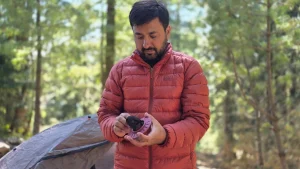
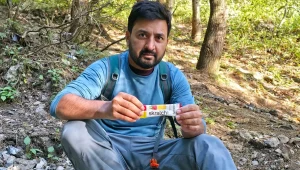
After using the Opinel No. 08 INOX on hiking and backpacking trips, it has become my top pick among backpacking knives. What I like most is how much useful cutting performance I get from such a simple, lightweight tool. At about 1.6 oz, it adds very little to my pack, yet the thin 3.28-inch stainless-steel blade slices food, opens packaging, cuts cord, and handles the small trail jobs I actually use a knife for exceptionally well.
Its biggest strength is that thin, easy-cutting blade. For backpacking food prep like fruit, cheese, vegetables, bread, or other camp meals, I prefer it to many thicker folding blades.
The trade-off is that this isn’t a hard-use camp knife. I wouldn’t use it for batoning, prying, or other heavy wood processing. The traditional beechwood handle requires more care around prolonged moisture than a synthetic handle.
For the kind of cutting I actually need while backpacking, though, the compromises make sense. Yes, I would buy the Opinel No. 08 INOX again, and I would happily carry it on future backpacking trips.
Opinel No. 08 at a Glance
| Specification | Opinel No. 08 INOX |
|---|---|
| Current price | $23 Opinel USA / $22 REI |
| Steel | 12C27 modified stainless steel |
| Blade hardness | 55–57 HRC |
| Blade length | 3.28 in / 8.5 cm |
| Published weight | 1.5–1.6 oz / ~43–45 g |
| Overall length | 7.59 in |
| Closed length | ~4.25–4.3 in |
| Handle | Varnished beechwood |
| Lock | Virobloc rotating safety ring |
| Opening | Nail nick; normally two-handed |
| Pocket clip | No |
| Made in | France |
| Best use after testing | Backpacking food prep and light trail utility |
What I Like
- Excellent slicing performance. The thin blade is one of the main reasons I like the No. 08 for backpacking.
- Extremely low weight for the usable size. At roughly 1.6 oz, I get a 3.28-inch blade.
- The rounded beechwood handle is genuinely comfortable. It fills my hand better than many thin ultralight knife handles
- Very strong value. At roughly $22–$23, I don’t need it to compete with premium folders on materials or deployment speed.
What I Don’t Like
- Opening is slow by modern folding-knife standards. The nail nick and Virobloc system normally require two hands.
- There is no pocket clip. I usually have to keep it loose in a pocket, pouch, or backpack rather than clipping it securely where I can reach it quickly.
- The wooden construction needs more moisture awareness
- It isn’t a hard-use camp knife. The thin blade that makes it such a good slicer is exactly why I wouldn’t use it for prying, or heavy batoning
How I Tested the Opinel No. 08
I tested the Opinel No. 08 INOX for about one year across approximately 23 hiking and backpacking trips. Rather than testing it as a survival knife, I focused on the jobs I actually need from a lightweight folding knife around camp. I used it for preparing food, opening packaging, cutting cord, and occasional light whittling and carving.
I normally carry the Opinel inside my backpack rather than in a pocket because I rarely need immediate access to a knife while hiking. Most of my use happens after reaching camp. Over the year, I used it in cold, dry, and humid conditions. I paid particular attention to the wooden pivot, since moisture can cause Opinel’s beech handle to swell and temporarily make the blade harder to open.
I also repeatedly checked the Virobloc locking collar, blade pivot, handle slot, and cutting edge. So far, I haven’t needed to sharpen the blade. For the relatively light cutting I use it for, the original edge has remained adequate.
I did not baton wood, pry with the blade, chop, or deliberately abuse the knife. Those aren’t jobs I would buy a roughly 1.6 oz folding knife to perform. For me, the more useful test is whether it stays sharp, safe, and comfortable for the jobs I actually encounter while backpacking. My broader approach to repeated field use, durability checks, and separating firsthand findings from research is explained in how I test and review hiking gear.
Hands-On Trail Testing and Performance
Cutting Performance
The Opinel No. 08 cuts so well for backpacking largely because its blade is thin. For the jobs I actually use it for, I see that as a strength rather than a weakness. After about a year and roughly 23 hiking and backpacking trips, I’ve used mine for food preparation, opening packaging, cutting cord, and light whittling. For those jobs, the blade moves through material with very little resistance.
Food prep is where I notice the advantage most. The blade slices cleanly rather than wedging food apart. Its 3.28-inch length is long enough for the fruit, cheese, vegetables, and other simple camp foods I normally prepare. The pointed Yatagan-style tip also gives me enough precision for smaller cuts.
It has also handled cord and packaging easily. I also used it for light wood shaving and whittling, and it has been comfortable.

The trade-off is that the thin blade has less lateral stiffness than a thicker hard-use folder. Independent testing also noticed visible blade flex when loaded sideways. I don’t consider that a flaw for backpacking because I slice with this knife; I don’t pry or twist with it.
Food Prep
Food preparation is where the Opinel No. 08 makes the strongest case for a place in my backpack. Over about a year of use, I have used mine particularly for vegetables, fruits, cheese, and opening packets. The thin blade is noticeably better at these jobs than the thicker blades found on many general-purpose folding knives.
With fruits and vegetables, the blade passes through cleanly. Cheese is similarly easy to portion because the thin blade creates relatively little resistance as it moves through the food.

I also like the amount of control the rounded wooden handle gives me for smaller cuts. The knife feels more like a compact paring/slicing knife than a miniature survival blade.
The 3.28-inch blade is plenty for the trail foods I normally prepare. Apples, blocks of cheese, smaller vegetables, sausage, and similar backpacking foods don’t require a large chef’s knife. I found the No. 08 to be the sweet spot between useful blade length and low carry weight. The stainless blade is easy to wipe clean after eating, but I take more care around the wooden pivot. For the pots and cooking gear I use alongside this kind of food prep, see my best backpacking cookware guide.
Grip and Handle Comfort
The Opinel No. 08 gives me a much more usable handle than its roughly 1.6-ounce weight suggests. The rounded beechwood handle is long enough for a full four-finger grip. I found it comfortable during food preparation because there are no metal liners, pocket clips, or sharp handle edges pressing into my palm.

The handle fills the hand instead of feeling thin or skeletal. I haven’t found the knife tiring during the light camp tasks I use it for.
But the handle has almost no aggressive texturing and no pronounced finger guard. The index finger sits close to the cutting edge when pushing hard into a cut. For controlled slicing, that hasn’t made the knife uncomfortable. But this is another reason I don’t treat the No. 08 like a heavy-duty folder.
Opening and Closing
The Opinel No. 08 is not a fast, one-handed modern folder. But for the way I use it around camp, that has not been a meaningful drawback. I normally open it with two hands using the nail nick, then rotate the Virobloc collar to lock the blade open. Closing is the reverse: unlock the collar, fold the blade, then rotate the ring again.

The action on mine is deliberate rather than fast. This suits food prep, cord cutting, and other camp tasks where I am not trying to deploy a knife instantly. I found the No. 08 fundamentally a two-handed knife, unlike modern folders. But that matters much less for my backpacking use because I normally keep it in my pack until I reach camp.
The one thing I watch closely is humidity around the wooden pivot. Some owner reports repeatedly show that moisture can swell the wood and temporarily make the blade much harder to open or close. On my knife, I have not noticed it yet, as I try to keep it dry. But I will keep monitoring it and will keep updating the findings.
Edge Retention and Sharpening
After roughly one year and around 23 hiking and backpacking trips, I still haven’t needed to sharpen my Opinel No. 08 INOX. My use has included cutting vegetables, fruits, and cheese, as well as opening food packaging, mostly. For those jobs, the original edge has remained sharp enough that I haven’t noticed a practical reason to touch it up.
That doesn’t mean the No. 08 is an edge-retention champion. Opinel specifies its current stainless blade at 55–57 HRC, which is a relatively modest hardness rather than an attempt to maximize wear resistance at all costs. Opinel also uses a thin, convex-ground blade designed to be straightforward to regrind. For the way I use this knife, I actually see that as a sensible trade-off.
Independent sharpening tests reinforce that point. Some users found the steel unusually easy to bring back, taking roughly 8 to 10 minutes to restore a strong cutting edge. I haven’t subjected mine to abrasive rope-cutting marathons or other artificial edge-retention tests. So I won’t claim exceptional longevity. What I can say from actual use is that for food prep, cord, packaging, and light woodworking, one year has not yet pushed the edge to the point where I feel it needs sharpening.
Weight and Carry
I measured the No. 08 at 1.59 oz, with a closed length of about 4.3 inches and an open length of roughly 7.5 inches.

In actual backpacking use, the low weight matters more to me than the closed size. The No. 08 is not especially tiny in the hand or in a pocket. But it gives me a proper four-finger handle without the weight of a metal-framed folder. Opinel’s beechwood construction is a big reason for that. If I want to cut weight even further and only expect small trail jobs, my Gerber LST Mini drops the knife weight to just 0.53 oz, although I give up a lot of blade length and food-prep efficiency.
I normally carry mine inside my backpack rather than clipped to a pocket because I usually need it around camp for food prep and small cutting jobs, not while actively hiking. That also means the lack of a pocket clip bothers me much less than it would an EDC user. I found that the wooden handle is bulkier in a pocket than many modern folders. And there is also no dedicated carry clip.

Durability: What I Checked After a Year
My Opinel No. 08 has now been used for about one year across roughly 23 hiking and backpacking trips, including food prep, cord cutting, packaging, and light whittling.
I checked the cutting edge, tip, and blade faces for chips, rolled sections, scratches, and corrosion. I still haven’t needed to sharpen mine. I haven’t noticed any edge damage significant enough to affect the food prep or light trail cutting I use it for.
Opinel specifically says its stainless steel can still reach its limits after prolonged contact with salt water, acids, or detergents.
I also inspect the beech handle for cracks, swelling, dents, worn varnish, staining, and damage around the blade slot. Wood remains more sensitive to prolonged wet conditions than a synthetic handle. After my year of normal backpacking use, I have not seen any cosmetic dents.
I also check the pivot and stainless Virobloc collar for blade play, looseness, grit, corrosion, deformation, and whether the lock still holds securely. Opinel’s Virobloc uses a fixed and sliding stainless-steel ring and locks the blade both open and closed.
Long-term owner reports show why this is worth watching: heavily used Opinels can eventually develop collar wear or blade play, although other owners report many years of reliable use.
Overall, after a year, I haven’t encountered a durability problem that has stopped the No. 08 from doing the lightweight backpacking jobs I bought it for.
Is the Opinel No. 08 Good for Backpacking?
Yes. For backpackers who mainly need a knife for food preparation and ordinary camp cutting rather than heavy wood processing, I think the Opinel No. 08 is exceptionally well matched to the job. After about a year and roughly 23 hiking and backpacking trips, it remains my top pick in my Best Backpacking Knife guide.
At only about 1.6 oz, it gives me a genuinely useful 3.28-inch blade and a full four-finger handle. The thin blade is especially good for slicing. And that matters more to me on a backpacking trip than having a thick blade capable of abuse.
There are compromises. The wooden handle needs more moisture awareness. I also need to use both hands to open it. There is no pocket clip. But I usually carry mine inside my backpack and only take it out around camp. So the slower deployment and lack of a clip don’t bother me much.
I don’t recommend it for batoning, prying, or frequent heavy woodwork. For those heavier camp jobs, I use the Morakniv Companion instead because its fixed blade and more substantial construction are much better suited to wood processing. If heavier camp chores matter more than minimum backpacking weight, my best camping knives guide covers the more robust options I would choose instead. For the lightweight cutting jobs I actually perform while backpacking, however, the No. 08 gives me a better balance of weight, cutting ability, comfort, and price.
My Final Verdict
After about one year and roughly 23 hiking and backpacking trips, I would absolutely buy the Opinel No. 08 INOX again and keep carrying it backpacking. It remains my top backpacking-knife pick because it gives me what I actually need on the trail: a very light ~1.6 oz package, a useful 3.28-inch blade, and a comfortable full-size handle. I still haven’t needed to sharpen mine for the relatively light work I ask of it. Opinel’s simple stainless blade and wooden construction also keep the weight remarkably low.
Its biggest compromise is that it behaves like a traditional lightweight folder, not a modern hard-use knife. Opening normally takes two hands. There is no pocket clip. You need to be more careful with the wooden pivot around moisture. I wouldn’t use the thin blade for prying or heavy wood processing.
If you need one-handed deployment, a stronger modern lock, tougher materials, a pocket clip, or hard-use capability, spending more makes sense. For ordinary backpacking cutting, though, I don’t feel that I need those features.